Quick Answer
Residential painting covers everything from a single accent wall to a full interior-and-exterior repaint — walls, ceilings, trim, doors, cabinets, and siding. For interior work, plan on $1.50 to $4.50 per square foot depending on scope, covered in detail below. The bigger decision, though, usually isn’t price — it’s whether to DIY or hire residential painting services, and picking colors and prep steps that actually hold up in a Minnesota home. This guide walks through all of it: color, technique, common mistakes, cost, and how to choose who does the work.
What’s Included in Residential Painting
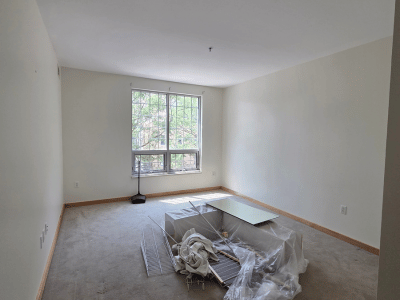
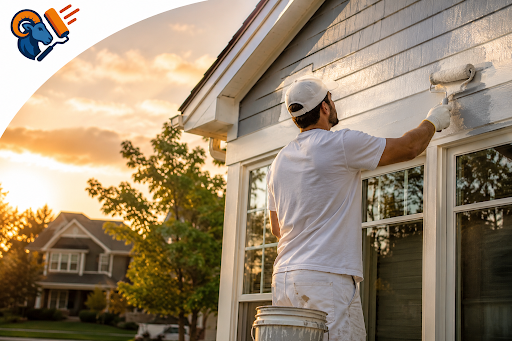
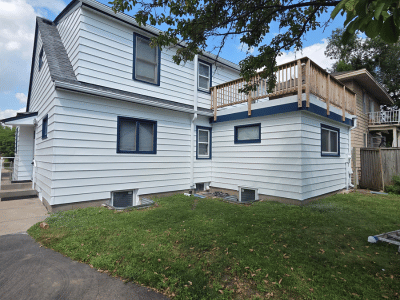
Residential painting splits into two categories. Interior work covers walls, ceilings, doors, trim and baseboards, and cabinets — the rooms used every day: bedrooms, kitchens, bathrooms, living rooms. Exterior work covers siding, stucco, brick, wood trim, exterior doors, and window trim, plus the prep that protects a home through Minnesota’s freeze-thaw winters. Residential painting services differ from commercial work mainly in priorities, not just scale — homeowners care most about color accuracy and a clean finish in spaces they live in daily, while commercial jobs are scoped around square footage and downtime. Most homes need both interior and exterior work at some point, just rarely in the same year.


Choosing the Right Paint Color
Natural light shifts a color far more dramatically than most people expect — a swatch that looks warm in afternoon sun can read grey and flat under evening lamplight, so test samples in the actual room, at different times of day, before committing to gallons. Larger rooms can carry a bolder color without feeling small; smaller rooms often read better in lighter, cooler tones. Let existing flooring and furniture set the palette rather than picking a color in isolation. Living rooms tend to hold up well in warm neutrals; kitchens and bathrooms do best in colors that photograph well under mixed lighting; bedrooms usually lean calmer and more muted. Whatever you land on, paint a 2×2 foot sample on the actual wall first — that one step prevents more redo calls than anything else.
Basic Techniques That Separate a Good Paint Job From a Bad One
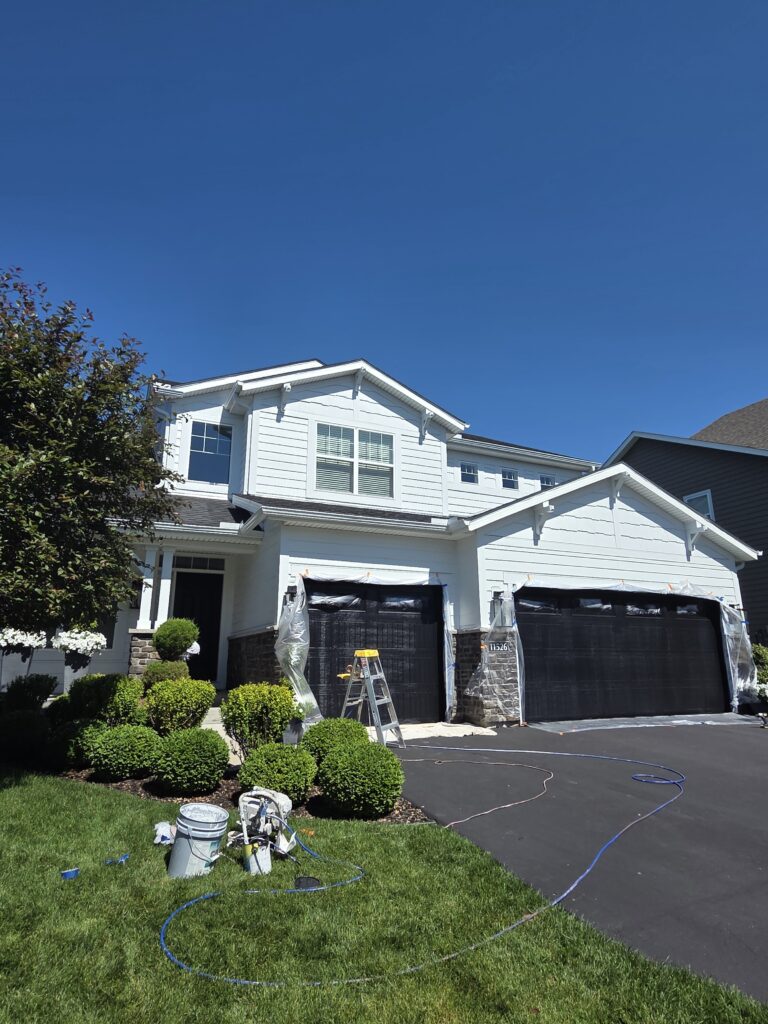
Cutting in — brushing a clean edge along trim, ceilings, and corners before rolling — is where most DIY jobs fall apart, since a shaky hand there shows on every wall. Rolling should follow a wet-edge technique: work in manageable sections and overlap slightly into the previous section before it dries, which is what prevents visible lap marks. Back-rolling — a light second roller pass over a freshly sprayed surface — combines the speed of spraying with the texture and adhesion of rolling. Brushes still matter for tight trim a roller can’t reach cleanly. Spraying makes sense on large, uninterrupted surfaces like garage doors or new siding, but it takes real masking and ventilation planning — not usually a first DIY project.
Fixing Common Wall Painting Problems
| Problem | Fix |
| Uneven paint | Light sand, prime the problem area, and roll one full additional coat. |
| Patchy paint | Usually a coverage issue — apply a second full coat over primed spots. |
| Peeling paint | Scrape loose flakes, sand edges smooth, prime bare spots, then repaint. |
| Paint drips | Once dry, sand flat, spot-prime any bare drywall, and blend a fresh coat over the repair. |
| Cracks and holes | Patch and sand smooth before any paint goes on. |
Painting over peeling paint without removing it first is the most common repeat-repair call we get.
Aries Interior Painting Pricing
| Project Scope | Cost Per Sq Ft | 1,000 Sq Ft | 1,500 Sq Ft | 2,000 Sq Ft | 2,500 Sq Ft |
| Walls Only (Basic Painting) | $1.50 | $1,500 | $2,250 | $3,000 | $3,750 |
| Walls + Minor Repairs (Standard) | $1.75 | $1,750 | $2,625 | $3,500 | $4,375 |
| Walls + Trim + Ceilings (Full Interior) | $3.69 | $3,690 | $5,535 | $7,380 | $9,225 |
| Detailed / Premium Finishes | $4.50 | $4,500 | $6,750 | $9,000 | $11,250 |
A basic walls-only pass on a 2,000 sq ft home runs about $3,000; a full interior with trim and ceilings runs closer to $7,380. Exterior and whole-house pricing depends on siding material, stories, and prep condition, so it’s priced differently than interior square footage — see the exterior painting cost guide for that breakdown.
What Affects Your Price
- Total square footage — the biggest lever in any residential estimate.
- Surface condition — older Twin Cities homes with plaster or existing damage need more prep before paint goes on.
- Paint quality and coat count — a premium finish costs more per gallon but covers better and lasts longer.
- Trim, ceilings, and cabinets — priced beyond base wall coverage, which is why full-interior tiers cost roughly double the walls-only rate.
- Accessibility — vaulted ceilings, stairwells, and multi-story exteriors add labor and equipment time.
- Occupied vs. vacant — protecting furniture and flooring in a lived-in home adds time versus an empty house.
DIY vs. Professional Painting
DIY makes sense for a single room, a weekend timeline, and a homeowner comfortable with prep work — materials for a basic room run roughly $170–$240 once you add paint, tape, and rollers, but that number climbs fast once trim, ceilings, or real repairs are involved. Professional painting adds proper prep, the right primer for the surface, and a finish that doesn’t need a redo within a year. For anything beyond one room — a full interior, an exterior, or cabinets — the time and equipment gap (ladders, sprayers, multi-day scheduling) is usually what tips the decision toward hiring professional house painters instead.
How Often Should You Repaint?
There’s no fixed schedule — it depends on how the paint is actually holding up, not the calendar. Inside, watch for fading in sun-exposed rooms, scuffing in high-traffic hallways, or a color that no longer fits your furniture and flooring. Outside, Minnesota’s freeze-thaw winters are harder on exterior paint than most climates, so cracking, peeling, or chalking can show up sooner than homeowners expect. If you’re patching the same spot more than once a season, that’s usually the sign it’s time for a full repaint rather than another touch-up.
Why Homeowners Choose Aries
Aries Painting and Finishes has served the Twin Cities since 2011, with 500+ completed projects and five-star reviews from homeowners across Minneapolis–St. Paul. Every residential project includes a written estimate and licensed, insured crews — no surprises between the quote and the final walkthrough. Whether it’s one room, a full interior, or the exterior, the prep standard doesn’t change based on budget tier: proper sanding, priming, and coat count every time, not shortcuts to hit a lower number.

Choosing a Residential Painting Company
- Read recent reviews — not just the star rating, but what homeowners say about prep work and communication.
- Ask what’s included in prep — sanding, priming, and repair work should be spelled out, not assumed.
- Get a written, itemized estimate — a blended one-line number can hide what’s actually covered.
- Confirm paint brand and product — the difference between a builder-grade paint and a premium line shows up in a few years, not on day one.
- Check licensing and insurance — and ask about warranty coverage on the finished work.
- Compare value, not just the lowest bid — the cheapest quote often means the least prep, which usually costs more later.
Residential Painting FAQs
How much does it cost to paint a house?
For interior work, $1.50–$4.50 per square foot depending on scope — see the pricing table above. Exterior pricing depends on siding and prep condition; see the exterior painting cost guide for real ranges by home size.
How much does it cost to paint a room?
Typically $250–$650 for a single room, depending on size and finish level.
How do I choose a paint color?
Test a sample directly on the wall, in the actual room, at different times of day — lighting changes a color more than any swatch card shows.
How much paint should I apply to the walls?
The rule of thumb is two coats for even coverage. A dramatic color change (dark to light, or vice versa) sometimes needs a third coat or a tinted primer.
How do I fix uneven or peeling paint?
Sand the problem area, prime any bare or repaired spots, and apply a full additional coat — see the troubleshooting table above for specifics by problem type.
Is it cheaper to paint a house yourself?
On materials alone, often yes for a single room. Factor in your own time, equipment, and the risk of a redo, and the gap narrows quickly — especially on anything beyond one room.
Should I use primer before painting?
Yes, when you’re making a major color change, painting bare drywall or wood, or covering a stain or repair — skipping primer in those cases is the most common cause of patchy coverage.
Which is the best interior paint?
For common areas like living rooms and bedrooms, a low-lustre finish such as eggshell or satin is the usual choice. Semi-gloss has more durability and works better for kitchens, bathrooms, and trim.
Get a Free Estimate
Ready to Transform Your Home? Get a Free Residential Painting Estimate today from Aries Painting & Finishes — we’ll walk your space with you before you commit to anything.